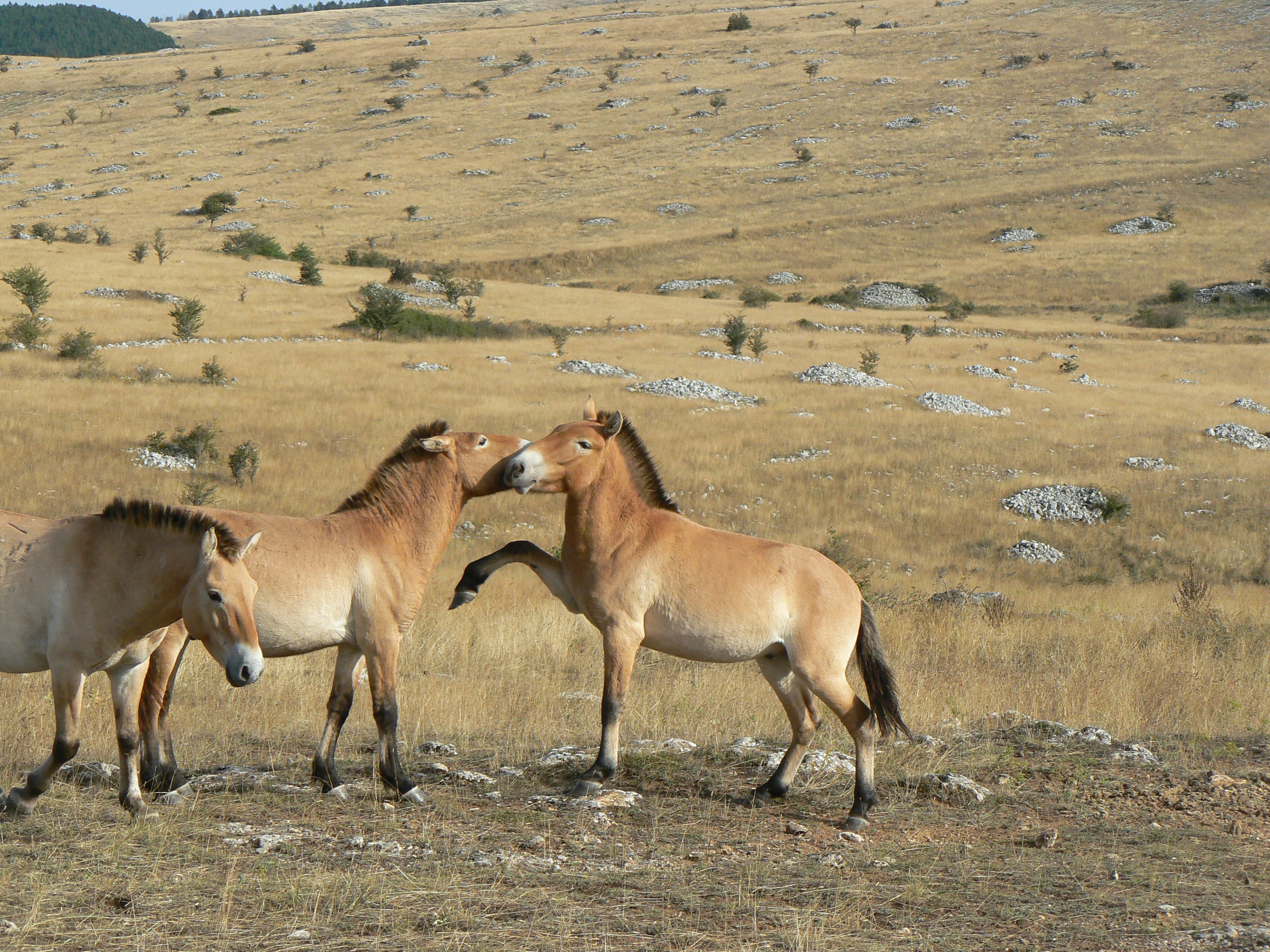
Part of my job as a youth representative is to do research on the Mustangs, and write papers about them. Anyways I thought I'd post some of what I've been writing about on here, as well as sites for more information.
What is often referred to as “American’s horse” did not actually originate in America. The American mustang is a descendant of domestic horses brought over by European explorers in in the late 15th and 16th century, so although they did adapt successfully they cannot be considered native. These horse herds have been added to since then by western explorers, and as recently as the mid-century, horses have continued to be released to the mustang herds. The mustang can be linked back to the Iberian horses, which were horses native to the Iberian peninsula. Modern Iberian breeds include the Andalusian and Garrano. The original Spanish horses also included Arabians and barbs ancestry. Because of the varied breeds the mustang is combined from, mustangs have a wide array of colors and differing physical assets depending on the herd and region they’re chosen from.
Based on the latest data available, February 28, 2010, the Bureau of Land Management estimates that approximately 38,400 wild horses (about 33,700 horses and 4,700 burros) are roaming on BLM-managed land in 10 western states. Since wild horses have virtually no natural predators and their herd sizes can double about every four years, the BLM must regulate herd size. If the herd size was not regulated, the herds would consume the natural resources and eventually cause a “crash“ in herd numbers. The ecosystems of public rangelands are not able to withstand the impacts from overpopulated herds, which include soil erosion, sedimentation of streams, and damage to wildlife habitat.
As for the 1971 Wild Free-Roaming Horses and Burros Act, Section 1333 of that law mandates that once the Interior Secretary "determines...on the basis of all information currently available to him, that an overpopulation exists on a given area of the public lands and that action is necessary to remove excess animals, he shall immediately remove excess animals from the range so as to achieve appropriate management levels.” The BLM removes thousands of animals from the range each year seeking to achieve the appropriate management level of 26,600 wild horses and burros on Western public rangelands. That is 12,000 fewer than in the 1800’s. To help ensure that herd sizes are in balance with other public rangeland resources, the BLM removed 6,413 wild horses and burros from the range in Fiscal Year 2009. The Bureau placed 3,474 removed animals into private care through adoption in FY 2009 -- down from 5,701 in FY 2005. Since 1971, the BLM has adopted out more than 225,000 horses and burros.
The BLM has over 30 years of experience and employees and contractors use state-of-the-art techniques to gather horses ensuring the most humane treatment of the animals. The entire practice of gathering is very humane and the mortality rate resulting from helicopter-driven gathers is usually less than one percent. In 2009, the number of direct fatalities (out of more than 7,500 horses gathered) was 0.53 percent. When some indirect mortality does occur it’s usually associated with older horses in poor to very poor condition. These already weakened horses would likely die on the range if not gathered and are examined by staff professionals and veterinarians. They are euthanized if they are unlikely to improve or do not respond to treatment.
The BLM Director, Bob Abbey states the purpose, and one of the priorities of the BLM clearly: “The Bureau of Land Management’s top priority is to ensure the health of the public lands so that the species depending on them – including the nation’s wild horses and burros – can thrive…”
References:
www.mustangheritagefoundation.org
www.extrememustangmakeover.org
www.nationalwildhorseadoptionday.org
www.blm.gov